
Does China own the future?
And also: The Second Cold War in semiconductors (and telecoms). An antitrust case against Google. Digital infrastructure as an investment opportunity. Netflix results. The future of big cities
Don’t underestimate China
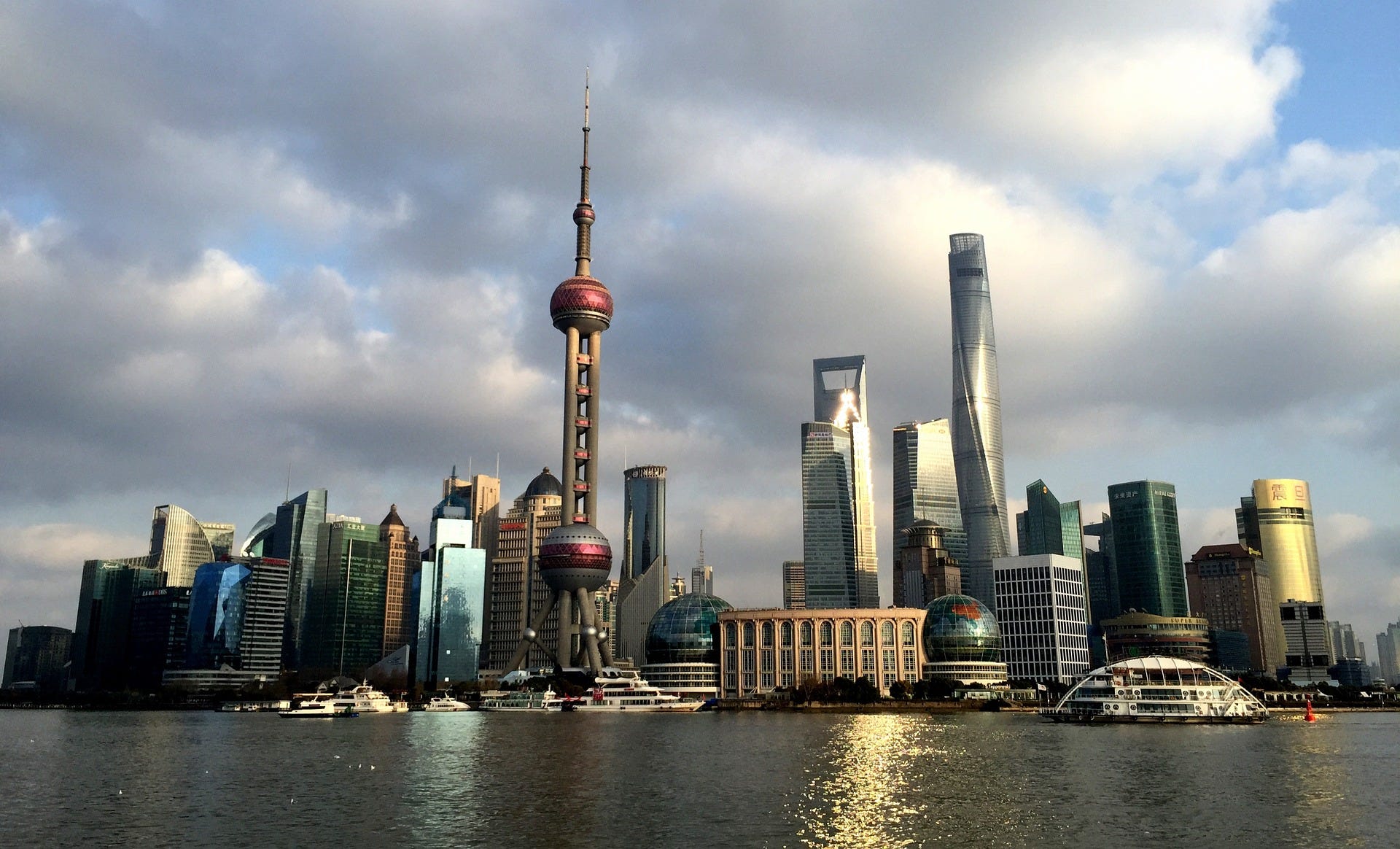
This week the “celebrity investor” Ray Dalio used the FT pages to warn us not to underestimate China’s position to lead the future. He thinks that there is currently an “anti-China bias” that is making people “blind” to the actual trends under way. He claims that if we compare China and the US in a number of key indicators for future success, the verdict is clear… (FT)
China is growing again, and this is helping them in their “Cold War” against the use, and in particular improving their position as a leader in the APAC region (FT) (Bloomberg)
It looks clear that this expansion / international influence is what the government wants, and this would explain their initiatives to “open up” to the world outside. Shenzhen (the “Chinese Silicon Valley”) emerges like a “free zone” that aims to attract foreign investors (Bloomberg)
But this remains challenging, as shown by the case of Ant, the FinTech subsidiary of Alibaba (FT)
A tsunami in the semiconductor market…
There is a tsunami in the global semiconductor market, as a consequence of the disputes between the US and China. Silicon chips are seen as an essential technology to dominate the future, with applications in smart devices, internet of things, connectivity, the cloud, and Artificial Intelligence. So chip design and manufacturing have become the hotspot of the China-US Second Cold War, and the driver of a new wave of techno-nationalism that is expanding globally, including Japan, South Korea and Europe, which is considering a $35bn program to become self-sufficient in semiconductors, as a central component of “digital sovereignty” (Bloomberg)
Intel, the historical industry leader, is not having a good time (as its results showed this week). And we learned last week that they’re selling their flash memory business. But it seems that, more than a capitulation, this could be a strategic move to release cash and dedicate it to 5G and Artificial Intelligence, looking to fill the market gaps that the US ban of Chinese companies is leaving (WSJ)(WSJ2)
… with collateral effects on telecoms
These wars on chips are already having a clear impact in the telecom industry, where Huawei and ZTE, which were on the way to lead the telecom equipment market, are now suffering from their inability to get their chip designs manufactured. As many operators still rely on their technologies, this could be starting to delay 5G deployments, which could be more expensive because of the need to transition to different suppliers. The US keeps trying to block Huawei’s sales in markets all over the world, including Africa, where they’re offering loans for local operators to buy equipment from Western providers like Ericsson and Nokia (WSJ1)(WSJ2)
The wave of change is obviously good for Ericsson and Nokia, the Western leaders in telecom equipment. Ericsson presented its quarterly results this week and they showed the highest margins in 14 years (a clear sign of lower competitive pressure). And the company has managed to grow even amid headwinds from the pandemic (which has decelerated network deployments globally) (Bloomberg)(FT)
At the other side of the coin, Huawei’s quarterly results, also announced this week, showed a rather drastic reduction of revenue growth (+3% vs, +25% last year). Yes, this is still +2pp vs. the growth that Ericsson has announced, but it is driven mostly by the (almost “captive”) Chinese market. And it includes sales of smartphones. Huawei has also claimed that they have chip stocks to sustain their telecom equipment for at least one more year (Bloomberg)
This week Sweden joined the club of countries that have banned Huawei and ZTE for “critical 5G infrastructure”. Of course, this is Ericsson’s home, at the end of the day (WSJ)
As with chips in general, all this is driving a wave of “techno-nationalism” also for networks. This is clear in countries like India, where Reliance Jio has just announced (at a Qualcomm) event, that they’re building their own 5G infrastructure, together with the American chip supplier (Bloomberg)
An antitrust case against Google…
The US Dept of Justice has started an antitrust process against Google, so it seems that concerns on the power of “Big Tech” companies are turning into actions. But investors don’t seem too worried (Bloomberg)
Still, some voices warn that this could actually be a first “tangible” sign of a (potentially costly) change in social tolerance for Big Tech’s business practices, so it could have significant financial implications in the long term (FT)
Investors keep cool in part because the action against Google is very “narrow” and is focused on a very limited set of potential irregularities, linked to the deals that Google does with Apple and other vendors to position its search engine as the default in most devices. Many experts believe that it will be difficult to demonstrate anything illegal here, as it is easy for users to change the default search tool (but others claim that users never do that) (WSJ)
Google is not so strong as some people think: What seems clear is that, against what many people think, Google’s position is not equally strong in all its businesses, and they have a quite limited market power in some of them (WSJ)
Interestingly, Microsoft remains silent. They’re one of the companies that would benefit from a strong action against these Google Search deals, but they also suffered the most similar antitrust process to this in the recent past, remains silent now. It seems that this could be related to a “mutual-non-aggression” pact that they signed with Google 5 years ago, when S Nadella became CEO (FT)
… that could possibly expand to other Big Tech players
Other areas of technology, and other Big Tech companies, could soon be affected by similar processes:
Facebook is in a complex equilibrium, trying to survive massive pressures in the middle of a highly polarized US election. As an example, The Economist this week says that the question of who controls content in social media platforms is too important for democracy to be left in the hands of a few tech executives (FT)(TheEconomist)
A clear example of these pressures was the case of the New York Post message about J Biden’s son, that was removed last week by both Facebook and Twitter from the platforms. Now it seems that both companies are going to be subpoenaed but the US Congress (FT)
Is Facebook the next one? This week, along with the announcement about Google, there were rumors that the FTC is recommending an antitrust case against Facebook (WSJ)
Microsoft could become a target. They are apparently in a “safer” place with respect to regulators, but could also be on the way to more uncomfortable positions, as the pressure to stimulate growth is starting to increase, and the company is looking at product bundles not so different from the ones that provoked government action in the past (TheEconomist)
Data ownership as a hot topic: This week we also heard about a bipartisan initiative in the US that is looking to “democratize” access to data and AI innovation through direct government intervention (in the shape of a “national cloud infrastructure” hosting public data sets). Quite like what European policymakers are looking for… (FT)
But technology could make that fight irrelevant: As it is often the case, new technologies could be on the way that would make all these political / pseudo-religious fights about data ownership (and sovereignty) irrelevant. What if we could have strong AI algorithms capable of learning with “practically no data” (MITTechReview)
Digital infrastructure as an investment opportunity
New signs of investors’ interest in telecom infrastructures: Telecom Italia announced a new plan to invest $5bn in fiber deployments in Italy. Meanwhile, Cellnex continues its march to become the leading European player in physical telecom infrastructure , with rumors of a $10bn acquisition of Hutchison’s towers (Bloomberg1)(Bloomberg2)
Revenue growth continues to prove that the cloud will be an essential component of the future of business: IBM’s quarterly results, the last ones for the company as we currently know it (before the asset split that was announced a few days ago) show that their cloud strategy (and the Red Hat acquisition in particular) could be working, after all. Still, investors were not happy as the company didn’t provide an outlook for the rest of the year (Bloomberg)
Did we overestimate the growth of video streaming?
Netflix results show that we might have overestimated the (positive) impact of the pandemic on video streaming: Investors penalized the stock for lower than expected subscriber growth, and the main takeaway was that the “pandemic effect” could have started to vanish (WSJ)
Netflix’s competitors also managing expectations:
Disney+ is perceived to be at a critical point, as Verizon’s free offers / bundles are about to end, and the company has to turn these subscribers into actual revenue streams. The general impression is that growth won’t be so easy from now on (Bloomberg)
Uncertainty around WarnerMedia: AT&T started the week asking regulators to scrutinize potential competitive issues in Amazon’s Prime Video offers, in what looked like a not-so-good sign about the performance of their own HBO Max service. Then, later in the week, they presented their quarterly results, with quite bad numbers for their legacy media properties (movie productions for theaters and PayTV), but with faster than expected growth (+8.6m) in HBO Max subscriptions (WSJ)
Quibi has finally announced that it’s closing. They were supposed to be the “next generation Netflix”, but they found themselves in the middle of the pandemic as they launched the service, which was targeting daily commuters that suddenly were not there. So we’ll have to wait to find out if this was actually a good idea (WSJ)
The future of big cities
Optimistic views on the future of big cities after the pandemic were published this week: Yes, we’re seeing deep changes under way within the city centers of big metropolis like London, as the Work From Home trend is leaving some areas almost deserted. The business implications of this will also have demographic consequences, like an exodus of low-income immigrants suddenly without jobs. But there could be a basic set of human needs that are best addressed through city life. So the authors here expect a brilliant, albeit different, future (FT)(FT2)
The City of London in particular has released a 5-year plan that calls for a renewal through tech startups, outdoor gyms, cycling tracks, and even a skateboarding park. All these probably can’t be directly linked to “human needs”, but would be expected to offset the exodus of the financial companies (FT)
Companies making irreversible moves to digital
This is starting to be seen as a political issue: Digitalization is accelerating as a consequence of the pandemic, often with significant implications for the workforce and, as a consequence, creating new social problems that will have to be addressed by governments (FT)
Ikea, traditionally far from the digital world, is now exploring new business models, including new “experience stores” at city centers (FT)
This could finally be the time for Facebook to monetize WhatsApp: As many companies look for ways to maintain contact with their customers in the “social distance age”, there are incentives for them to pay for premium features in the most used messaging app. Facebook has a plan to turn this into growth (WSJ)