
E-commerce goes social
And also: Winners and losers after the pandemic. The transformation of telecoms. The big semiconductor crisis. The debate on content moderation. The Big Tech antitrust battle
The rising wave of social commerce
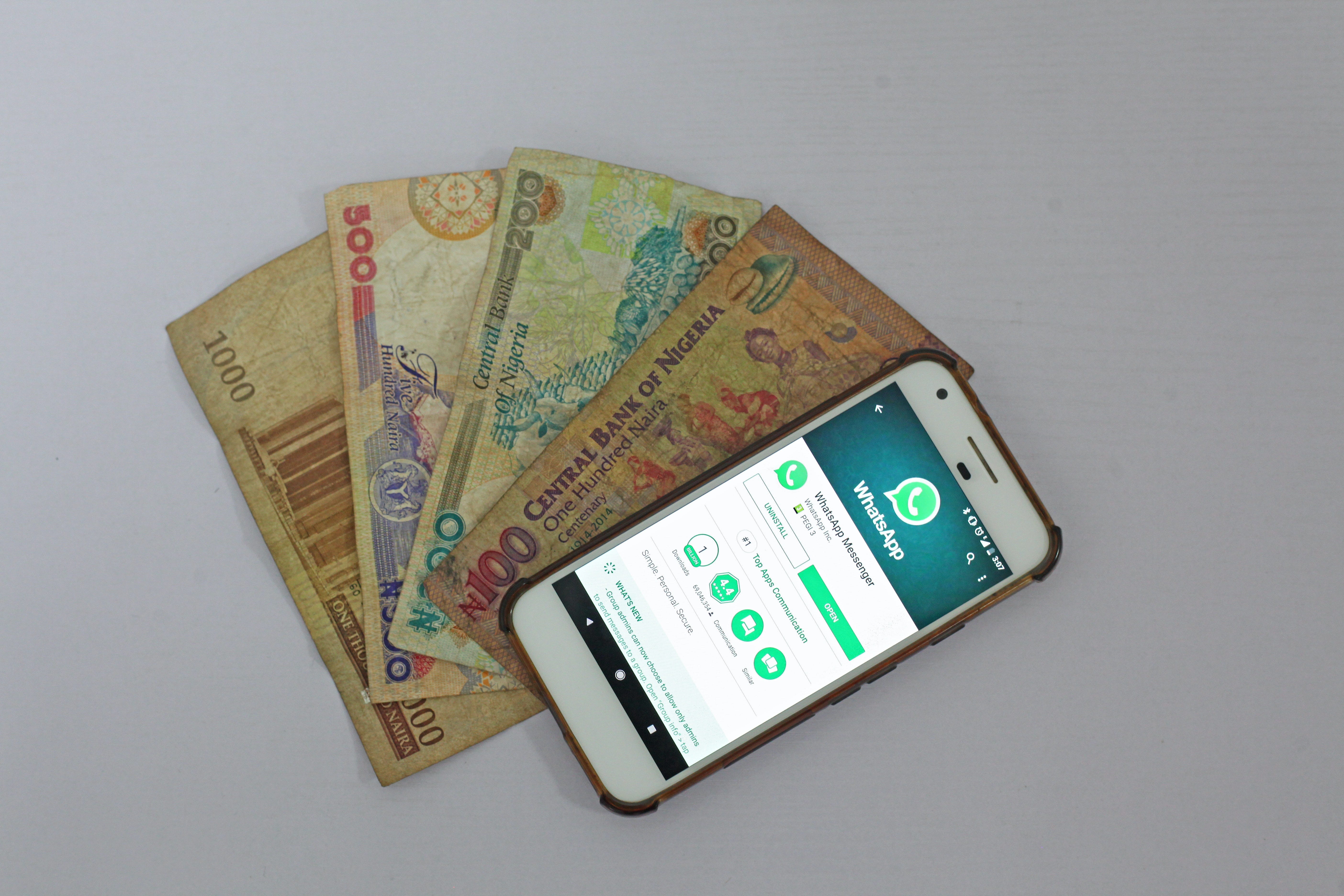
A $48bn market has emerged in SouthEast Asia (almost half of total e-commerce in the region): 44% of Southeast Asia’s $109bn e-commerce transactions happen through social media or chat rooms on Facebook, WhatsApp or Line. Countries like Vietnam, where the number is 65%, and Thailand, where social commerce has grown from $3bn to $11bn in just three years, are specially impressive. As with other “digital” trends, this could show what’s coming for the rest of the world. The driver seems to be that people actually like to have “human interactions” when they go shopping (a limit to automation?). For social media apps like Instagram and TikTok, this can confirm the opportunity to offset (with e-commerce) the current pressure on programmatic ads, and even to eventually turn online sales into the main monetization engine. For regulators, it creates new problems, as the model also makes it possible for individuals operating home businesses to disrupt Main Street shops with lower prices, and without paying any tax (Bloomberg)
Is this the big opportunity to monetize WhatsApp? Facebook moves to include in-app payments: In particular, for messaging apps, social commerce could be the big opportunity to finally get a sustainable monetization engine. The case of WhatsApp, which has historically rejected to use ads, is an obvious one. That’s why, in this context, the efforts by Facebook to deploy in-app payments in WhatsApp are important, as they could be a powerful tool for e-commerce too. A deployment of a person-to-person payments feature for WhatsApp in Brazil was blocked by local regulators last year, but has now finally been approved. Brazil is the second-largest market for WhatsApp globally, with 120m users, so this is a significant step. Facebook is now looking to do the same in Mexico and Indonesia, also very large markets, with a huge potential (FT)
Content will also be part of what’s sold. Twitter just enabled a way for users to pay for content: Twitter also released an in-app payment feature this week. In this case, it is more clearly targeted to offset the (increasing) limitations of ad-based monetization, and it is positioned as a way for audiences to subsidize the content they like. Having said that, content can be seen as just one product, among a large set of potential things that people can try to sell through Twitter, and when you look at it this way it is clear that this opens the possibility for Twitter to also act as an e-commerce platform (CBNC)
Food deliveries become the hottest e-commerce category
More signs that food deliveries are here to stay: Money flowing to a plethora a new apps. Online supermarkets have been a big winner during the pandemic, for obvious reasons. And, unlike others, no one seems to have any doubt that in this case the trend will be sustainable. After all, it doesn’t look like people actually liked to go to supermarkets in person… A sign that confirms that the shift to digital will continue is the massive amount of money that is currently being poured on a series of emerging “rapid-delivery” startups, which target the “casual grocery shopping market”. Anyone can understand that there is a point of exuberance behind all these, and that probably only a few of these companies will survive, but investors seem to be happy with that, expecting that at least one or a few of them could become “the next Uber” ($100bn market cap) (FT)
Food delivery becomes Uber’s revenue growth engine… Talking about Uber, this food delivery market is not strange to them. The company has leveraged its fleet of cars and drivers to offset the fall in people’s demand for trips with the fast growing demand for food deliveries. According to the company’s quarterly results, announced this week, Uber Eats represented more than 60% of Uber’s booking revenues in 1Q21, after more than doubling since 1Q20, while the ride business declined -38% over the same period. Uber Eats is also a way for Uber to get access to drivers, who typically prefer to transport food than people, these days. Now there is also a big expectation on the company’s ability to bundle both services, but it still looks unclear how much people would be attracted by ordering food together with their rides back home from a train station or an airport, which are some of the examples mentioned (WSJ)
… in detriment of Lyft. Uber’s arch-rival Lyft also presented results this week, and they looked a bit worse than Uber’s. Uber are being more aggressive in their incentives to drivers, one of the key bottlenecks for growth in these late-pandemic days. Also, Uber is offering them a combination of rides and food deliveries through a membership program called Uber Pass, which increases drivers’ loyalty. Lyft has pointed the (lack of) access to drivers as the cause for their decline in rides since March this year, while Uber seems to have been growing in the US (Lyft’s main market) almost at the same time (WSJ)
The model is now expanding to pharmacy products: Deliveries are also expanding to products beyond the basic supermarket basket. Prescription medications are also a target for some startups, and a good candidate for same-day deliveries, given how purchasing decisions tend to happen. Pharmacies are a market of $350bn, just in the US, so there is room for massive growth here. This week we learned about Alto Pharmacy, a startup targeting this, backed by SoftBank, which is now being acquired by a SPAC, for approx. $2.3bn. Alto is expecting $700m revenues in 2021, and projects $2bn for 2022 (Bloomberg)
Other digital trends: where will growth shift after the pandemic?
Big Tech platforms look unstoppable (except by regulation, maybe): We talked about this last week. The 5 Big Tech platforms are coming out of the pandemic with even more power than when they entered, last year. They all beat expectations with their financial results last week, and investors can see the combination of these companies’ massive size and their currently high revenue growth rates as a better alternative to riskier ventures, like the ones represented by SPACs. So one would expect valuations to keep growing, as these giants keep capitalizing the shift to a “digital-first” society. The only big question mark for the coming months are years is, of course, regulation. And everyone seems to expect that something will eventually happen somehow, but investors don’t seem too worried about that (FT)
Dating apps are also expecting a golden age: We mentioned dating apps as winners of the pandemic when we did these analysis last year. And they are another success case that everyone now expects to be sustainable, as the lockdowns are removed, and people fully embrace what some have described as a new “summer of love”. The leading dating apps company, Match Group, presented its 1Q21 this week, and they beat expectations, with Tinder’s revenues starting to re-accelerate (+18% yoy vs. +14% in previous quarters) and non-Tinder brands growing +30%. The WSJ proclaims that “dating is back in 2021”, and that investors hope that it will be “hotter than ever” (WSJ)
Finance becoming digital-first, but the transition is a bubble: the boom of exotic cyber currencies. There is a wide consensus on money becoming digital, a trend that the pandemic has also accelerated. And there are some analysts relating the recent rally in cyber currencies with this mega trend. However, in some cases it is difficult to avoid the feeling that there is some irrational exuberance behind. For instance, Ether, the token behind the Ethereum blockchain that is used in many business applications, is up +1,500% since last year. Then, Dogecoin, an even more exotic cryptocurrency, apparently favored by Elon Musk, and mentioned by him in his SNL monologue this weekend, has climbed more than 12,000% only in 2021. And there are others, like DigiByte, VeChain (+900% this year) or SafeMoon (+20,000% in a couple of months). Regulators are concerned, and they probably should be… (Bloomberg)(WSJ)
The future of e-fitness gets uncertain. Is Peloton sustainable? Investors seem to have developed a kind of “Peloton-fatigue”, and the company’s stock has fallen after a peak in January, when they company reached a $49bn valuation (approx. 6x vs. the IPO). News this week won’t help, as the company has recognized that its treadmill products have caused many injuries (and one death) and has started to recall them. The 1Q21 numbers didn’t look too bad, with revenue growing +141% annually, driven by subscriptions (+135%) and a relatively high customer retention (92% annually). The current user base also seem to love the service, with 26 monthly workouts per subscription (almost one per day…) Still, the future growth of the company is largely under question, as people could prefer to go back to gyms in person, or (even more) to exercise outdoors. In addition to that, new competitors are starting to appear, often with cheaper prices (WSJ)
New infrastructures: the transformation of telecoms
Verizon confirms its shift to focus on the (connectivity) core business: Verizon confirmed the rumors that they’re shifting to focus almost exclusively in their role as connectivity providers, and announced the sale of a 90% stake in Yahoo and AOL to Apollo, a private equity fund, at a $5bn valuation. Verizon is receiving $4.25bn in cash, which will help them pay back the debt generated by their need to acquire new spectrum assets for 5G ($53bn this year). Programmatic advertising used to be a big promise as a growth driver for Verizon back in 2015, when they acquired AOL, and in 2017, when they bought Yahoo. But for a number of different reasons, including regulation, the relative weakness of the acquired assets vs. the Big Tech platforms, the lack of cultural fit, and even the apparently weaker perspectives of advertising as the key monetization engine for internet services, the venture has failed (FT)
This could be the end of the company’s media ambitions. Investors now look at AT&T (and Xandr): Even if revenue hypes at telecom operators are frequent, and these things tend to be cyclical, this might be the end of Verizon’s dreams to become a media company. Yes, they’re keeping a 10% stake, but that doesn’t look significant. Now the question mark is on what will AT&T do. They could probably be tempted to follow a similar path, and there have already been rumors that they were considering to sell Xandr, their digital-ad business, which is not delivering the expected targets, even after a very significant investment, including the $1.6bn paid for AppNexus, a digital-ad exchange. A key difference with Verizon is that AT&T has a massive exposition to the content production business (through WarnerMedia), that they’re also starting to offer in a direct-to-consumer offer (HBO Max). So they could find a more “natural” way to leverage their digital ad assets. However, results are lukewarm for now, and all signs point to advertising becoming less important as a monetization mechanism for digital content, including TV, so let’s see what happens (WSJ)
Telecoms splitting into separate layers: As we’ve been discussing here many times, the telecom industry is increasingly structuring in three (largely independent) layers: (1) a physical infrastructure layer (represented by TowerCos and FiberCos, and creating a lot of interest from external investors); (2) a computing platform layer (including the active network equipment, progressively evolving into cloud architectures and software running on open, general-purpose hardware); and (3) a commercial / customer insights layer (including the connectivity service offered to consumers and the customer data linked to it). These three businesses require very different skills and are subject to different dynamics, so investors tend to value them (much) more when they’re managed separately. This could eventually force operators to choose among the three different roles. And we are starting to see signs of that:
In Africa, MTN plans to spin-off its most lucrative app (fintech) and its physical infrastructure: In a very similar context to what is happening to Verizon and AT&T, MTN is also in the process to monetize some of its most valuable assets, to pay down debt. And the way to do that is consistent with the company focusing on its core connectivity business. Indeed, they’re selling their very successful payments and mobile money unit, which had $53bn in transactions only in 1Q21 (+87% vs. last year), and their stake in IHS, a pan-African TowerCo now planning an IPO. With this, it looks like MTN will keep using the towers and offering the customer ID underlying the fintech transactions, but won’t manage any of the two businesses anymore, to focus exclusively on connectivity (Bloomberg)
In Italy, the government changes strategy and will no longer support a re-monopolization of fiber infrastructure: Italy had started to be a rather extreme case of a separation between physical infrastructure and connectivity commercialization, with a plan, sponsored by the government, to merge Telecom Italia’s fixed network assets with the fiber network of the state-owned rival Open Fiber, that would have resulted in an effective monopoly of the Italian fixed network physical infrastructure. All connectivity retailers would have then bought wholesale services from this new entity. But the plan has now stopped with the new Italian government, that has announced it won’t longer support the initial plan, and that they would like to use EU recovery funds to boost investment and competition among different carriers. Vodafone apparently didn’t like Telecom Italia’s plan, so it’s easy to link the decision with the presence of Vittorio Colao (ex-CEO of Vodafone) in the new Italian cabinet. Telecom Italia’s shares fell almost -10% as an initial reaction to the news (Bloomberg)(FT)
Other basic infrastructures: trends in semiconductors
The semiconductor crisis looks like a long-term problem, and only 3 companies can solve it: Every week we get at least one long and more or less deep analysis on the semiconductor crisis under way. This week it was the turn of Bloomberg, with this article that warns us that this is a long term problem, because solutions are difficult and expensive, so they will take time. Making chips is complex, and it’s getting tougher. Building new plants takes years and billions of dollars. And the breakeven for every plant is achieved only if its operating profit exceeds $3bn. All this requires enormous economies of scale, so in practice only 3 companies (Intel, Samsung and TSMC) account for most of the $60bn spent every year in the machines required to build the chips. And only these three companies can afford to build new factories. So the current hype among policymakers about making their countries “self-sufficient” for semiconductors doesn’t look within the reach of almost anyone (except maybe the US and China) (Bloomberg)
MediaTek in collision course with Qualcomm. Everyone talks about TSMC these days (see previous paragraph), but another Taiwanese company is also becoming a global chip industry leader. MediaTek builds and sells application processors (the “brain for a smartphone”) in direct competition with Qualcomm, who has been the traditional leader in that space, but who is progressively losing share to its Taiwanese rival. MediaTek is already the second largest company in Taiwan by market value (after TSMC), with a market cap of $62bn. They’re taking advantage of the Huawei bans to expand their business, because while Huawei used its own HiSilicon processors, most of its Chinese rivals, now growing at its expense, are MediaTek’s customers. In addition to that, Qualcomm has had some supply chain problems that have also been beneficial to MediaTek. So Qualcomm has a second market share challenge, with MediaTek adding to the stress that ex-customers like Apple had already created, by shifting to their own chip designs (WSJ)
IBM against the Moore’s Law. Meanwhile, the fight against “the end of Moore’s Law” keeps happening. This week Wired published a piece on how IBM have demonstrated a way to pack more transistors onto a chip, through a “3D” technique to add different transistor layers on top of each other. The company claims that this allows for an improvement of more than +60% in density, which looks like a huge advantage. This is also seen as a potential way for the US to recover its global leadership in chip manufacturing, in what is seen as a key geo-strategic objective, as our economies rely more and more on this infrastructure (Wired)
The debate of content moderation gets (even) hotter, and other regulatory news
Facebook’s oversight board pressures the company to change
The board has supported the decision to ban Trump, but has criticized the company and made recommendations: In what was probably its most important decision up to date, Facebook’s oversight board had to recommend what to do about the ban of Donald Trump’s account. The exercise resulted in something more general or deeper, basically because the board rejected to assume the responsibility of a decision like this, even if they said it was justified, and recommended Facebook to clarify its content moderation policies. According to the board, the point is that if they’re asked to make decisions based on a set of policies, it should be clear what these policies are, and this is not the case right now. They rejected to set these policies themselves, and went so far as to say that “in applying a vague, standardless penalty and then referring this case to the board to resolve, Facebook seeks to avoid its responsibilities”. A final decision will have to be made by Facebook, then, and the board suggested that it should be in the next six months (WSJ)
Content moderation processes are still complex solutions (to a complex problem): Underlying all this is the fact that content moderation is not easy. Among other things, it is not even clear a priori what kind of content should be banned. And the need to act against a “moving target” leads to plenty of unfair, or at least not transparent decisions. The WSJ reminds us that Zuckerberg himself has said that more than 10% of the company’s decisions about this are wrong, and that this is equivalent to more than 200,000 decisions every day. This is hurting customer experience, as many users are finding that they’re (temporarily) excluded from the platform with no clear explanation about why this happens. Automation is not helping so much, because it makes faster decisions and this makes them less understandable by users (which immediately suspect that something is wrong). More recently, Facebook seems to have opted for a more subtle approach, de-prioritizing some of the messages under question, and making less visible, rather than deleting them and blocking the authors. But also this could create a different kind of debates… (WSJ)
A debate is emerging on the need to control the business models and processes behind these decisions, rather than just the outputs: This opinion article at the Financial Times complains about Facebook’s approach to turn the problem into a discussion on banning decisions being correct or wrong (i.e. on the “outputs”) rather than on the company’s processes and business models, which the author suggests that could be the roots of the problem. In particular, he suggests that we will need more regulation like the recently proposed by the EU for AI systems, which intends to focus regulators’ attention on the data underlying algorithmic decision-making (FT)
YouTube is in a similar position to Facebook’s, but they’re acting more discretely: Meanwhile, Facebook’s competitors, which made similar decisions about Trump in January, are addressing the question in more direct ways. Twitter has already announced that the ban was permanent, with not so much noise about it, and YouTube has declined to say when they will consider to restore the account, and has limited to confirm that “internal trust and safety teams” (with no more details) are looking at the issue (WSJ)
Meanwhile, the antitrust battle on tech keeps expanding
The fight against Apple for the App Store is entering a new phase: The Federal trial against Apple over its App Store policies started this week, and Epic Games, one of the most prominent companies behind the accusation, presented opening arguments last Monday, describing Apple’s behavior and processes as “monopolistic”. Meanwhile, Apple accused Epic of a “narrow” way of looking at competition, forgetting that there are many other platforms, beyond the App Store, where consumers and developers engage in transactions. As we have often said here, this trial is important for Apple because it could be seen as a precedent in other regions, so whatever is decided could have global implications. Also, Apple has a lot of value at stake here, because the company’s service revenues (largely linked by App Store fees) could already represent close to $50bn revenues per year, and the figure is growing at +27% (in 1Q21). Apple keeps defending the idea that the App Store is more than a “toll gate”, and adds substantial value to end users, through privacy and security enforcement, but the WSJ is right when it says that the company should probably increase its efforts to explain this better to “a lot of people in power” (WSJ)(WSJ2)
Amazon’s cloud business is also under the radar: In the US, Amazon’s cloud unit AWS controls almost 65% of the local cloud market, according to Gartner, and this is more than enough to create concerns on potential antitrust issues. Two Republicans have recently asked the attorney general to investigate the particular case of a Pentagon contract that was finally awarded to Microsoft Azure, after what the company claims that were Trump pressures to influence the outcome. The two representatives are now saying that Amazon could have made “undisclosed payments” to a Pentagon official, and could have also been favored by a Defense officer that had previously worked for them as a consultant. This comes after media comments on how Amazon has been using bundles of the cloud with other services, including e-commerce, where they also are the dominant platform, to “force” companies to adopt AWS as their cloud provider (WSJ)
News from the Second Cold War in India: Huawei officially banned from 5G deployments: India’s operators won’t get their 5G network equipment from Chinese telecom vendors like Huawei and ZTE, and will use Ericsson, Nokia, Samsung and local vendors instead. The decision, under pressure from the Indian government, joins previous actions by the US, UK and Australia. But obviously India is a very large market, and 5G could represent massive investments (Bloomberg)