
Technology and politics: more entangled than ever
And also: The acceleration of the regulatory "techlash". Intel and the new age of semiconductors. The Second Cold War. Telecoms splitting in layers. The "electric car mania"
Technology and politics: more entangled than ever
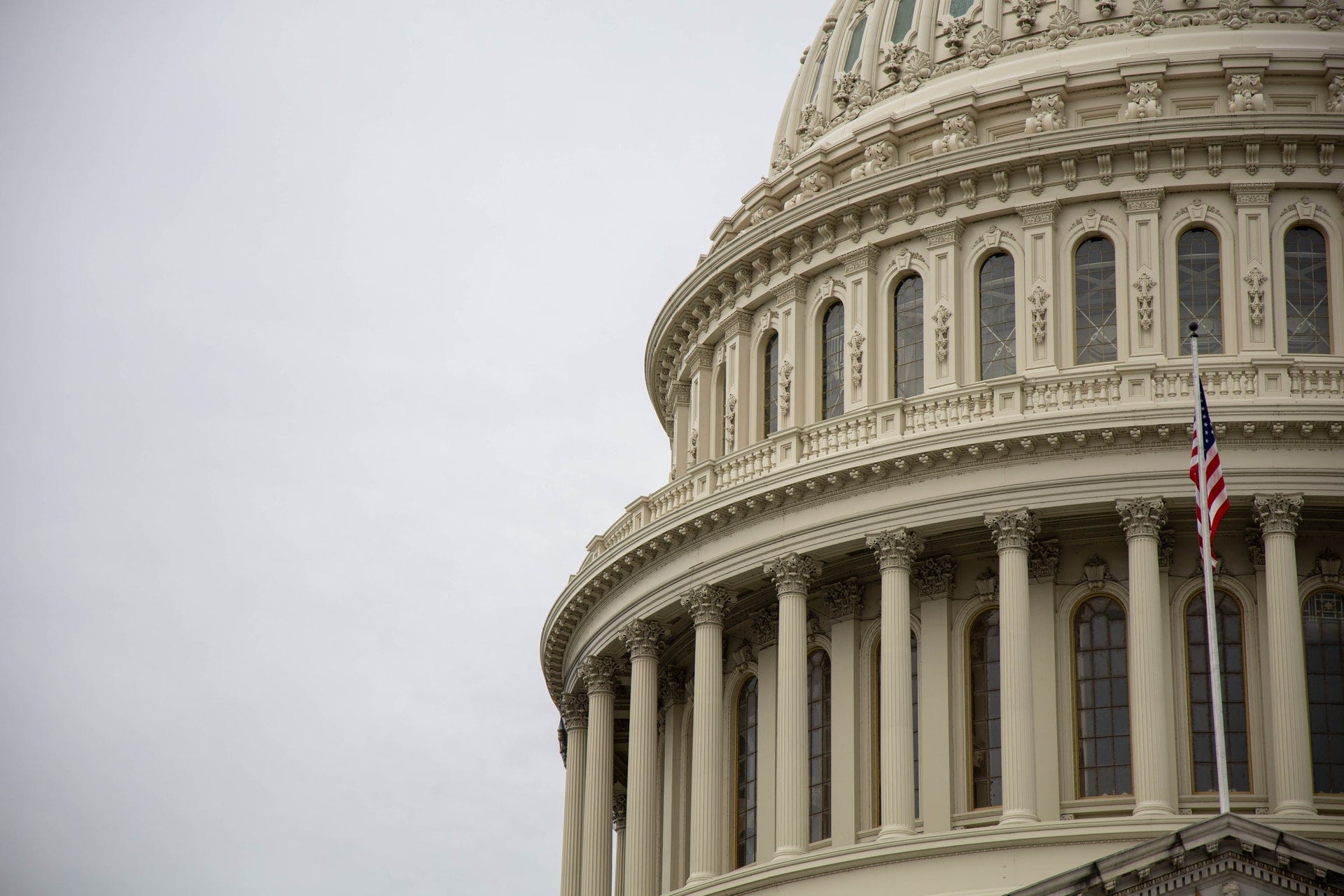
The week after the assault to Capitol, Tech companies remained at the center of the political discussion. The elimination last week of Trump’s Twitter and Facebook accounts was intensively debated, as well as the role these accounts may have had in provoking the violent incidents. And new actions from other tech companies happened, affecting the new apps where the extreme-right activists had started to shift (like Parler). The bottom line, for now, is a fascinating debate on the limits of freedom of speech in the digital era, and (very specifically) on who should implement them, and how
Indeed, the crisis is revealing that public opinion can be managed from a few technology control points: Albert Wenger, from Union Square Ventures (a VC fund in NY) discussed the topic in his blog this week. He talks about the actions against Parler, the app where extreme-right users had been shifting since the November election, and more rapidly after the Capitol events. For him the fact that the leading cloud infrastructure provider (in a very concentrated market) has dropped Parler, making it effectively impossible for users to have access to it, is a precedent. It reveals that the control (in a few hands) of very specific resources in the internet value chain (like cloud infrastructure) can be a powerful tool to decide what goes online and what does not. And it may be showing us that in the future, governments could work together with large tech corporations to influence citizens “behind the scenes”, by promoting or inhibiting specific opinions (Continuations)
Social media apps are sustaining the bans, amid public controversy
Consistent with the Trump ban, Facebook is acting against all content linked to the Washington assault: After the suspension of Trump’s account, Facebook has moved to remove all content mentioning ‘Stop the Steal’, in an additional effort to cool down the public discussion in the platform. The company also confirmed that the president’s account will be suspended for at least 2 weeks (WSJ)
On Wednesday, YouTube followed Twitter and Facebook: Google announced the suspension of Trump’s YouTube “channel”, and the pause of all political ads on the company’s sites, including any references to the impeachment, Biden’s inauguration or the Capitol assault. Google mentioned they were following a “three-strike” internal protocol for this decision, with the first strike restricting new uploads for a week, the second one triggering suspension (what has happened now) and the third one leading to deletion. Gab, an alternative far-right platform, said they were working to back-up and re-post the videos (WSJ)(Bloomberg)
Also on Wednesday, Snapchat made its move: The company has permanently terminated Trump’s account, arguing he had violated the app’s “community guidelines” many times, posting “hate speech” messages and inciting violence. Like Google, they mentioned a protocol that was being followed, including several warnings that had already been sent to Trump’s team each time a message violated the rules (Bloomberg)
Concerned about Big Tech’s power, European governments have also criticized Trump’s bans: If already in the US people like Albert Wenger or event Twitter’s Jack Dorsey (above) have shown concerns about the power that Big Tech companies have developed, this is even more intense in Europe, because governments here see these large corporations as “foreign” powers. Even if these companies would work in coordination with democratic institutions, these would probably be American institutions, after all. So it is not a surprise that both Germany and France have publicly opposed the decisions. In Poland they’re even talking about a new “social media free speech” law that would make it impossible for the platforms to block any account (Bloomberg)(BBC)
And the Chinese model reminds us of the dangers of “letting governments control this” (as some propose): In China we’re seeing a different model in action, maybe closer to the dangers that Albert Wenger identifies in his blog, but also apparently more orthodox according to some Western analysts, who have reacted saying that it should be governments, not private corporations, who should have the lever to activate this “censorship” actions. An example in Hong Kong this week, where a Broadband operator (HKBN) has blocked access to a website with political pro-democracy content, is making us think (FT)
Twitter’s CEO defends the ban, but claims to be “concerned” about the precedent: On Wednesday he tweeted that, even if the actions were justified, “over the long term this will be destructive to the noble purpose and ideals of the open internet” (WSJ)
Many people discuss if social networks are really so influential: A frequent argument these days to criticize both Twitter and Facebook is that their reaction has happened too late, and that they could have avoided the problem by acting faster. This may be true. But could the problem have emerged without them? At the end of the day, political radicalization is far from a new phenomenon. Indeed, the FT this week has argued this week that traditional media, and very particularly Fox News in the US, may have played a more significant role. As one of the articles say: “TV news established the idea that what matters about an event is its contested meaning, not its core of facts. Mark Zuckerberg just monetized the contest” (FT)(FT2)
A deeper controversy has started after Big Tech companies have acted on other control points (the App Store and the Cloud)
Actions against Parler, an alternative far-right app, have shown the power in the hands of Big Tech firms: Tech giants have been trying to avoid the debate on their responsibilities on “toxic” viral content in the internet, but the actions by Google, Apple and Amazon against Parler, a far-right social app where Trumpists were shifting, have shown the power they have to manage the conversation, and most people see this as an implicit recognition that they should actually be held accountable. Google and Apple banned Parler from their app stores, and Amazon did something even deeper, with a suspension of Parler’s cloud account, which in practice led to an impossibility to use the app, even from a web browser. The logic seems clear: either platforms are held accountable for content they’ve now shown they can control, or they are treated like some sort of “universal service” that can’t cancel anyone’s account unless this is supported by a court’s decision or a legal mandate. But it is not an easy decision… (Bloomberg)
Policymakers are complaining that “unaccountable” companies are making this type of decisions: For instance, Senator Marco Rubio talked about “monopoly power” in the hands of “four or five companies”. And it looks like this is the key (regulatory) challenge that could impact the future of Big Tech. Others have said that the actions against Parler had been motivated by competitive reasons, but even if there had been many downloads (14x in one week, after the Capitol events, to reach 182,000 last Friday), most serious analysts believe that the impact on Twitter and Facebook would have been very limited, from a business perspective (WSJ)
Parler is now struggling for survival: The WSJ tells us the story of Amazon’s Parler ban, and mentions messages in the platform where users were claiming for poisoning the water supply in minority neighborhoods or killing their enemies. Parler says their team of moderators has been overwhelmed and claims that Amazon’s decision came as a surprise, and without any previous warning. The truth is that, even if their rules said that criminal activity was not allowed, they consciously tolerated offensive language and didn’t do much fact checking. Now the CEO says that they will be shut down for longer than initially anticipated, as they had not been able to find alternative cloud suppliers, apparently due to their concerns on negative publicity (WSJ)(Bloomberg)(WSJ2)
And they have sued Amazon for this: In a complaint filed last Monday, Parler claims that Amazon did this for “political animus” and “to reduce competition in the microblogging services market, to the benefit of Twitter”. Amazon has responded that there is content on Parler that “encourages and incites violence against others”, and that the company is “unable or unwilling to promptly identify and remove this content”. As the other Big Tech companies involved in the case, the Seattle giant mentions a violation of their terms of service (WSJ)
Bans keep happening against other far-right platforms, as they emerge: On Tuesday, Apple also suspended Wimkin, a small app that claims to be a “free-speech” oasis, on yet one more terms-of-service violation, including content calling for a civil war in the US, and for the arrest of VP Mike Pence. The platform had just 300,000 users, but Apple seems committed to show consistency in its actions, and a threshold (to make decisions) seems to have been crossed (WSJ)
And fintech companies are joining the trend: Stripe, who was processing private contributions to fund Trump’s campaign, that had been linked to the recent “stop the steal” activities, has announced they will no longer process more payments for “high risk activities” like the ones that “engage in, encourage, promote or celebrate unlawful violence or physical harm to persons or property” (WSJ)
There are signs that the problem is not solved yet
Encryption and private communities could be the next refuge for extremists (as it was for ISIS too): Facebook has been seeing encryption and “private communities” as the solution for many of its content / fake news content problems. But this has risks too. The Financial Times points to the shift of far-right groups to Signal and Telegram as one reason why these messaging apps are growing so fast these days. WhatsApp would obviously be another alternative, but being part of Facebook and having recently announced changes in their privacy policies are key factors against them, that could also explain most migrations to alternative messaging apps, at least out of the US. As a precedent of what’s happening now with the American alt right, the islamic terrorist group ISIS is known to have been using Telegram channels in the past (FT)
The business of “disinformation campaigns as a service” is booming: A recent study by the Oxford Internet Institute has found that an increasing number of advertising, marketing and PR companies are offering their services to “manipulate” online opinion to political parties and governments. Facebook was the vehicle in the past, but with money behind there will be more options (FT)
The regulatory “techlash” might now accelerate (globally)
Whatever the opinion about these actions, everyone expects more regulation for digital platforms: There was a “techlash” under way (and not only in the US) that we’ve been commenting here since a long time ago. But after the recent events everyone expects this to accelerate, and to become a priority in Biden’s agenda. This Financial Times article mentions the potential repeal of Section 230, a US rule that protects social media apps from being sued for the content they carry. interestingly, this alternative would possibly stimulate more actions like the ones we’ve just seen, so it’s a bit surprising to see some right-wing commentators supporting it (FT)
It looks like political action on Big Tech firms is unavoidable: Either they have been inactive, or have acted late. with a threat against democracy that was growing on their platforms (as the left tends to think) or they have violated freedom of speech rights by acting against specific content sources (as the right tends to think). No one questions now that these companies have a lot of power on the online conversation, and as long as this is perceived as influential on political outcomes, policymakers will have incentives to act. In this context, the recent account suspensions may be seen as “preemptive” moves to avoid more regulation, but this does not look realistic (FT)(FT2)
The pressure is increasing also out of the US, e.g. on taxes: In Europe and elsewhere, governments have started to act in relation with the local tax that Big Tech companies are (not) paying for business they’re getting out of the US. France has already implemented new “digital service taxes”, and others are coming. Obama tried to avoid addressing the issue, and he was successful because the trend was still nascent. Trump adopted a more confrontational approach. And the FT sees an opportunity for Joe Biden to start the negotiation of a global digital tax framework that would (they claim) benefit all parties. A “global antitrust report” just published by Freshfields (a law firm) expects this and other regulatory issues to become part of the day-to-day agenda for Facebook, Google, Apple and Amazon (WSJ)(FT)(Freshfields)
The regulatory “business as usual” continues. This week, a new investigation on Amazon: The State of Connecticut has started an investigation of Amazon's e-book business, on allegations of anti-competitive behavior in the company’s agreements with publishers (WSJ)
In the parallel Chinese Big Tech regulatory battle, Ant Group is trying to comply with the government’s requirements: The story in the Chinese Internet sector is very parallel to what we’re seeing in the West. China’s Communist Party is concerned by the accumulation of power in the hands of a few local “Big Tech” giants, and that’s why they stopped the massive Ant Group IPO some months ago. Now there is a “re-arrangement” process under way, and this week the Chinese central bank said that Ant Group is preparing a plan to “overhaul its business” while they keep operating (Bloomberg)
All this is creating a large debate on the future of “Chinese capitalism”: The “Chinese way” to capitalism has been a successful experiment based on the combination of a tight political control with a “free enterprise” culture, clearly focused on new technology ventures. As technology becomes mixed with politics, with Big Tech firms accumulating power that can increasingly challenge governments (like in the US these days), the Chinese Communist Party has started to act, and the model is apparently being redesigned now. In particular, the figure of China’s most successful entrepreneur, the ex-CEO of Alibaba, Jack Ma, is at the center of all this, and his companies are under the government’s radar, with an antitrust investigation of Alibaba, and with much stricter rules under way for the activities of its financial branch (Ant Group). In the attached FT link, a local expert describes how China’s “top leadership wants to ensure that neither Ma nor anyone else ever crossed the red line trying to exert personal influence over government policies again”. Sounds really familiar… (FT)
The case of WhatsApp also shows how sensitive has public opinion become: This has been an unconventional week, so this was not so much of a “trending topic” as it could have been in other times. But still there has been a large controversy about Facebook’s intention with the new privacy rules for WhatsApp. The initial communication about the coming changes has generated such a negative reaction (including massive downloads of competing apps like Telegram and Signal, after explicit recommendations by Elon Musk or Chamath Palihapitya -an ex-Feacebook executive) that the rollout of the new tools has finally been delayed. Previous to this decision, Facebook had tried to clarify that the new policies won’t affect the privacy of consumer messages in the platform, but the “viral” perception had already expanded… (WSJ)(FT)
Meanwhile Facebook’s pending challenge is to monetize WhatsApp, without scaring users: As the FT’s Lex column pointed out this week, it is still unclear that the B2B2C model that has worked in China (WeChat) can be applied elsewhere. WhatsApp Business was launched in 2018 and it has had some momentum in Brazil or India, but apparently not very profitable yet (FT)
The new age of semiconductors triggers strategic changes at Intel
Times of change for Intel: a new CEO was announced this week Intel had already lost its #1 position as the most valuable US semiconductor company (against Nvidia), and we had also heard rumors about the company potentially outsourcing their chip manufacturing to rivals like Samsung or TSMC, which were also a confirmation of Intel’s inability to keep pace in processes to build the most advanced / compressed chips (e.g. 5nm technology like the one used by Apple’s A14 processors). After all this, the board has decided to replace Bob Swan as CEO. The move is supported by Daniel Loeb, the CEO of the activist fund Third Point, which has a stake in Intel and may have been a key stakeholder in this crisis. The new CEO will be Pat Geisinger, an insider who used to be the company’s CTO in the past, before moving to be the CEO of VMware.The WSJ calls him the “Chief Geek” and highlights his engineering background (a traditional Intel CEO skill that Bob Swan didn’t have). Intel’s shares rose +7% on Wednesday, after the announcement (WSJ)(WSJ2)
It is not clear if the change of CEO will be enough: It seems that Loeb / Third Point want Intel to focus on the core business, and are against outsourcing manufacturing. They have been asking for divestitures and have recently criticized “certain failed acquisitions” like Altera (programmable chips) or Mobileye (driver-assistance systems for cars). But everyone agrees that there is not a quick fix for the company. The FT synthesizes the challenges in 3 key priorities: (1) need to expand into fast growing chip markets beyond the traditional PCs and servers (where Intel still has most of its sales), (2) need to catch up vs. TSMC and Samsung in leading edge chip manufacturing, and (3) need to transition into a more modular approach to designing chips, a strategy that seems to be working for AMD (WSJ)(FT)
Previous to this, rumors of an Intel outsourcing contract had made Samsung’s shares jump: The company’s stock rose the most in the last 10 months, more than +9%, to reach an all time high this week, on rumors that they and TSMC were to be chosen by Intel to build its most advanced chips. Samsung is perceived not to be so advanced as TSMC in manufacturing technologies, so this was seen as a sign of confidence by investors (FT)(Bloomberg)
Meanwhile, TSMC looks like the new “king of chipmaking”: TSMC presented its quarterly results this week, and both their present and their future look bright. Net profit grew +23% for the quarter, and +50% for the whole year, and the company is growing fast, driven by strong demand from companies like Apple and Nvidia, and even if the Huawei ban has dramatically decreased demand from China (which was only 6% of total revenues vs. 22% last year). The company understands that this success is linked to their differential manufacturing technologies. The most advanced 5nm chips already accounted for 20% revenues in the quarter, and TSMC is expecting to spend $28bn CapEx in 2021 (a +50% increase vs. last year) to meet increasing demand for its most advanced chips (WSJ)(Bloomberg)(FT)
Demand for semiconductors is red hot, and supply is struggling: Demand for semiconductors is so high that there is already a chip shortage that has recently pushed up prices. The fact that demand is shifting to the most advanced processors (the 5nm technologies that TSMC is expanding) creates few incentives to increase capacity in more traditional technologies, but there is demand for them too. In general, the industry is starting to have a (manufacturing) capacity problem, and e.g. the car industry is already feeling the pressure, with both Ford and GM having recently commented about this in the US. The expectation is that shortages will remain until at least 2022. As it always happen with these things, there will be people and companies that will get rich in the process (WSJ)
Chipmaking tool vendors have a nice future: Among companies profiting from the capacity crisis, there are the suppliers of equipment for chip manufacturing, like the Japanese Tokyo Electron. They’ve just said that they expect orders from TSMC and Samsung to keep growing for years to come, as these clients upgrade their capacity to address the exploding demand (Bloomberg)
5G networks are expected to demand even further, as Qualcomm’s M&A bets reveal: Qualcomm just announced the acquisition of Nuvia, a chip startup founded by former Apple engineers, and specialized in CPUs. They will pay about $1.4bn in cash, and claim that Nuvia’s expertise will be key to boost chip performance and power efficiency, with the latter emerging as a key feature for 5G modems, which will be integrated in a diversity of form factors, some of which won’t be probably be able to support large batteries (WSJ)
Telecoms splitting in specialized layers: infrastructure and digital technologies
Telefonica sells its towers to an infrastructure specialist: Yes, there were powerful financial reasons to do this. And the outcome is not so different from what American operators like AT&T and Verizon have since a long time ago. But it is difficult not to see this as one more step towards the segregation of telecom assets in separate “layers”: infrastructure, computing / active equipment and retail / customer interface. If that’s the case, the question is what will be the next physical network asset to be spun off… The other interesting aspect of the news is that American Towers is entering Europe, and this could be bad for Cellnex (or Vodafone’s Vantage) in terms of competition, or good, from an M&A perspective (Bloomberg)
Vodafone seems to be following similar steps: Also driven by financial valuations (very hot in the “neutral” infrastructure space), Vodafone recently announced the segregation of Vantage Towers, its own TowerCo, that is now preparing its IPO. This week they said they were adding (to Vantage) their share of the towers supporting their UK JV with Telefonica (Cornerstone). This is equivalent to approx. £1bn, according to market multiples. Vantage will control one of the largest tower portfolios in Europe, and the implicit value from the IPO is already being reflected in the Vodafone valuation (FT)
Cellnex, the pioneer of Tower infrastructure in Europe, could now be in a crossroads: The FT reminds us that Cellnex, as one of Europe’s hottest stocks, with a market cap that made it larger than Telefonica. Growth has been fueled by a constant and successful series of M&A deals. Now, after Vodafone’s and Telefonica / American Towers’ moves, the company may be in a crossroads, with more competition both in the core business (adding more carriers to each of their towers) and for M&A deals. The valuation is high (at 23x EBITDA) and this is an additional challenge. A banker is quoted in the article, with a feeling that “Cellnex will make an interesting target for someone like American Tower” (FT)
Meanwhile BT is creating a new unit specialized in the digital computing layer: BT, which already has a segregated infrastructure unit in the UK (for regulatory reasons, since a long time ago) is now moving to create another unit focused on the second layer, the “active” computing technology. The new unit, BT Technology, will be led by an ex-Bharti Airtel executive, and will focus on cloud services and AI/ML. Not that different from what Telefonica also did more than one year ago. And, as in the Telefonica case, the challenge is to execute (FT)
Tesla’s financial rally creates an electric car “mania”
The first weeks of 2021 are showing a frantic activity in electric cars, driven by Tesla’s valuation: Investors are looking at Tesla’s stock track record, with a market cap that has reached more than $800bn, surpassing Facebook, and growing +743% during the year. So the timing looks good for startups to sell shares, and this explains that many of the initial IPOs planned for the year, often through SPACs (“blank cheque companies”) are focused on electric vehicles. Examples of these are Proterra (electric buses and battery systems) or Lucid Motors (software to control battery cells) (Bloomberg)
And there are no signs that the electric car mania is going to stop: An analysis from Wedbush, a wealth management company, concludes that Tesla’s share price could reach $1,250 (+48% vs. current -already high- value). This would be justified by a “bull case scenario” of increased demand for “greener” cars in China (Bloomberg)
The previous SPAC acquisitions of electric car startups show signs of “irrational exuberance”: According to a Financial Times analysis, the nine auto tech groups that listed via SPAC last year were expecting only $139m revenues in 2020 (and this compares with most valuations measured in $bn) (FT)
Batteries are one of the hot themes for the industry: Lots of innovation is happening to improve the charge speed for batteries, currently limited by structural factors including the way lithium behaves. The WSJ tells the story of a company called QuantumScape, that is working on a battery architecture based on solid (vs. liquid) electrolytes, which would solve the problem. Volkswagen has invested $300m and the company also has backing from Bill Gates’s clean-energy fund, Breakthrough Energy (WSJ)
Big Tech companies are preparing to ride the electric car wave:
In China, Baidu just announced a partnership with Geely, China’s largest private automaker: The JV will be focused on making battery powered cars, and will incorporate technologies for voice assistance, digital maps and (progressively) autonomous driving, that Baidu is developing (FT)
More discussions about a future “Apple car”: A Reuters report two weeks ago said that Apple was working on its own electric car, targeting a release date of 2024. Hyundai and Foxconn have been mentioned as potential manufacturing partners, with a business model similar to what has worked so well for the iPhone. Shares of Hyundai jumped in reaction to all these rumors, but this week we are being told that there are plenty of risks for a “manufacturing contractor” in this project, including lack of profitability, longer than expected timings (WSJ)
Huawei is also working in more futuristic things, like “smart roads”: Huawei has built a 4-km pilot of such a road in a Chinese city. The information embedded in the road, including data collected by a large number of sensors, helps a self-driving bus trovel back and forth (Bloomberg)