
Technology invades Corporate Finance?
And also: Governments in collision course with Big Tech. The “Cold Big Tech Civil War". The age of “smartphones on wheels”. Innovation snapshots. Digital infrastructure as a geo-strategic asset
A new age for corporate finance?
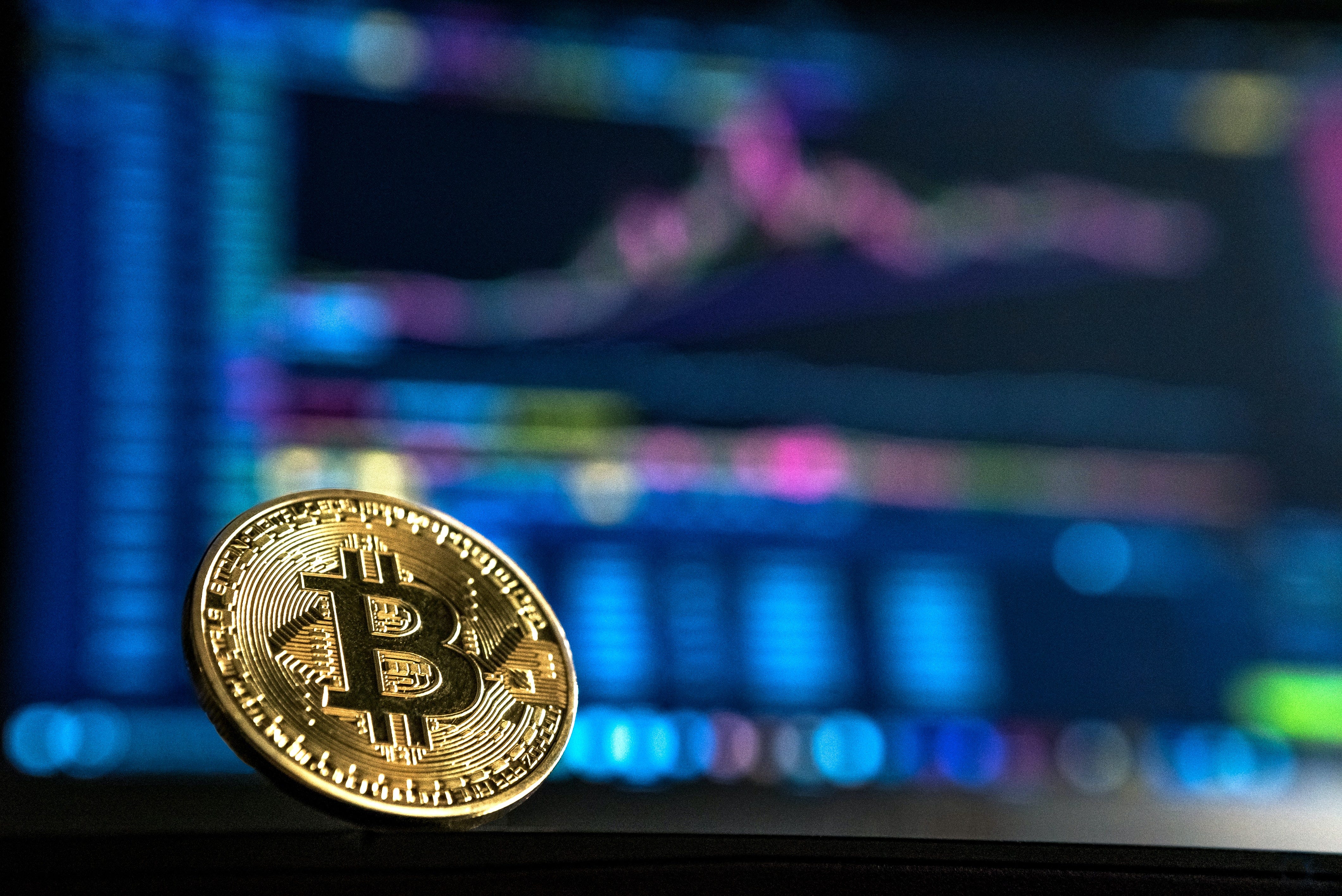
You are probably a bitcoin owner by now: News this week that Tesla just acquired a large amount of bitcoins have been widely discussed across the tech and business press. In this FT column, the author reminds us that the enormous current valuation of Tesla represents a substantial share of the total value of the S&P 500, so funds linked to the index have automatically been exposed to bitcoin, without their investors being asked about it. And the problem could expand if other Big Tech stocks imitate Tesla (FT)
Tesla has bought (a lot of) bitcoin, becoming an even riskier stock: Last Monday, Tesla revealed in the company’s annual report that it had bought $1.5bn in bitcoin. They claim that this will help “diversify and maximize returns on the company’s cash that is not required to maintain adequate operating liquidity”. This is all very exciting. But the problem is (as the WSJ analysts say) that this “introduces even more risk to owning what is already one of the most speculative stocks of the current bull market” (WSJ)(WSJ2)
And other companies might follow (or not…): Now everyone is wondering if this will expand to other companies. Indeed, in a Lex Column, the FT sees this as a return of the “conglomerate”, with some stocks exposing investors to a variety of assets (and risks), and expects that companies like Google or Amazon could “win shareholder backing to speculate in bitcoin”. At the same time, in other FT article, some experts say that moves like this make “almost no sense”, due to the massive volatility of bitcoin (FT)(FT2)
Is this an opportunity for cash-rich Big Tech companies? What is clear is the Big Tech companies, with huge amounts of cash in their balance sheets, could now be tempted to invest in bitcoin and get at least some exposure to potential financial gains. Of course, as expected, the Tesla announcement has triggered the reaction of investment analysts, with a relatively unknown firm (RBC) directly recommending Apple to create a “crypto exchange”. Meanwhile, Twitter’s CFO has admitted they’ve “studied using bitcoin’ (Bloomberg)(WSJ)
However, volatility, transaction costs and performance have limited bitcoin’s adoption for payments: Meanwhile, amid all this noise, it is also clear that bitcoin has not really gained any traction as a form of payment, as they discuss in this WSJ article. Again, the large volatility, together with performance issues (very low capacity in terms of transactions per second, when compared e.g with Visa), would be behind the lack of adoption (WSJ)
And some experts question even its role as a store of value: Celebrity economist Nouriel Roubini has become one of the most conspicuous voices against cyber currencies, and he’s seen a new opportunity to communicate what he thinks, in the debate after the Tesla announcement. Apart from bitcoin’s problems as a form of payment, Roubini also questions its validity as a “store of value”, and says that even “The Flintstones had a more sophisticated monetary system” (FT)
This may be one more sign of a financial bubble: Another opinion piece in the FT claims that this could be “the sort of silliness we need to get used to at this stage of the longest market bull run in history” (FT)
Technopolitics: governments in collision course with Big Tech
Big Tech companies being pushed to pay for the (professional) content they distribute
Australia vs. Big Tech: the fight could be expanding: The dispute in Australia between traditional media, supported by the local government, on one side, and Google and Facebook, on the other, could now expand to Europe. According to news this week, some EU lawmakers are preparing a new digital regulation that would force Big Tech companies to pay for news published in their platforms. This would be justified by Google and Facebook’s “dominant market position in search, social media and advertising”. However, other policymakers would prefer to wait and see the impact of the (also new) EU copyright directive, which was aimed at improving content owners’ negotiating position. All this reveals the amount of anxiety that these topics create, recently (FT)
In Australia, the government is challenging Google’s threats: Meanwhile, in Australia the government doesn’t give any sign of wanting to yield to Google’s ultimatum to leave the market and stop providing search services. The PM has said that they “don’t respond to threats”, and journalists already talk about “G-Exit” (in an adoption of terminology that clearly shows the links of all these debates with nationalistic positions) (FT)
In addition, Big Tech companies could start to be held responsible for the content they carry
The US Congress is preparing to act: The US Congress could now be preparing to change ore even eliminate “Section 230”, the piece of legislation that currently protects tech platforms from being held liable for things users say on them. There is a bipartisan agreement on the need to act, and even Mark Zuckerberg (Facebook) and Satya Nadella (Microsoft) have said they would welcome more clear guidance from policymakers on how to do content moderation (WSJ)
The public opinion is pressing companies to increase content moderation: There is a big debate every time a platform makes a content moderation decision, but voices also appear whenever anything “toxic” spreads through their networks. An example is this analysis at the FT about the new forms of “alt-right”, a political movement now invaded by a younger generation with more technology skills, which are starting to use encrypted forms of communication, including Telegram groups, to spread their “white-supremacist” messages. The article ends with a call for tech companies to “be alert” (FT)
Facebook assumes increasing content moderation responsibilities: Consistently with all these pressure, we’re having news almost every day about how Facebook is acting to eliminate “hate content”. This week we learned about how they are tweaking the content prioritization algorithms to lower the visibility of political content. The company has also banned an Instagram account accused of promoting vaccine disinformation, and has helped the US government identify the people that assaulted the Capitol in January (WSJ)(WSJ2)(Bloomberg)
Twitter shows that content moderation can be beneficial to their business: These days we hear many calls to leave content moderation in the hands of the governments. The dark side of this is that governments are often not so well-intentioned as the theory seems to assume. We already mentioned the example of India last week, and this has continued, with Twitter blocking access to hundreds of account after the government asked for that. Meanwhile, and in relation with other comments that claimed that avoiding content moderation has been beneficial for tech platforms Twitter said in its results conference call that they actually have expanded their user base after banning Trump’s account (Bloomberg)(WSJ)
In China, it is the government who does content moderation: Obviously, China is the quintessential example of this (government intervention on the internet). This week we saw how a small delay in government action allowed for the pent-up demand of free speech to express itself in the new Clubhouse app. Then the government blocked access to it (FT)(NYTimes)
The GameStop affair opens a new regulatory front
The US government has started an investigation that could lead to action: In more practical / immediate terms, the US Justice Dept. has started an investigation of the GameStop case, analyzing the activity of brokers and social apps for potential “market manipulation”. This comes after accusations from some commentators of a “pump & dump” manipulation (i.e. artificially inflating the value of a stock through misinformation, to then profit by selling this stock at the peak) at Reddit’s WallStreetBets forum. At the end of the day, this could result in the ban of some investment apps and social media groups (WSJ)
The recent incidents reveal structural risks for the economy: A lesson that progressive Democrats in the US are extraction from the recent GameStop incident is that, contrary to what the mainstream opinion has been since the 1980s, markets are not the same thing as democracy. The problem is the economy is more dependent on stock valuations than ever, so all this recent volatility creates an unnerving feeling of risk, and claims are growing for the new administration to decouple the real economy from the stock markets, e.g. through goals (the article suggests rewarding “work” vs. “wealth”)(FT)
The “Cold Big Tech Civil War”: do we need regulation?
The battle between Facebook and Apple (around consumer privacy) is getting nastier: The war between Facebook and Apple, triggered by Apple’s plans to advise consumers about potential tracking by some apps (including Facebook’s) of their internet activities, seems to be getting nastier. The WSJ reports that Mark Zuckerberg has asked his team to “inflict pain” on their rival. What looks clear is that this type of competition can be far more effective than any kind of regulation (remember GDPR?). If consumers have a privacy problem, this is a market opportunity to be exploited, and competition will (faster and more effectively) create alternatives for them. The fact that there are Big Tech firms (like Apple) that are prepared to capture this opportunity only increases the effect (WSJ)
Microsoft keeps supporting actions against Google and Facebook in their battle against traditional media: A parallel case is happening also this days, in relation with the battle between traditional media and Facebook and Google in Australia. Microsoft has defended the position of the Australian government, positioning as a “media-friendly” alternative search engine. Now the company is also asking the US government to move in the same way as the Australians (and apparently the Europeans too) (WSJ)
Competition is getting hot in consumer apps, and shows the vulnerability of supposed to be “monopolists”: There are many more signs of competition increasing in the consumer internet space. TikTok is moving to e-commerce, replicating a previous move by Facebook (and Instagram), and in direct collision course with them. Meanwhile, Facebook is trying to build an alternative to Clubhouse (the voice-chat social app on the top of the wave these days). Finally, we also learned that Microsoft has been considering to buy Pinterest, one more sign (after the conversations to buy TikTok US last summer) that they want to reinforce their position in consumer apps. Where is the monopoly here? (FT)(Bloomberg)(FT2)
Twitter’s position, in particular, is seen at a crossroads: After the company’s results this week, analysts are commenting that the company is growing less than Pinterest or Snapchat, and that they probably need to develop an alternative monetization engine, not based in advertising only, to address the increasing demand of “quality content” (WSJ)
Apple emerges as a potential disruptor, with a good position to attack, and a good defense: Business Week published this long article this week, describing how Tim Cook has turned Apple into a huge fortress, which continues exploiting what were their traditional strengths, but that now is also very difficult to challenge from outside. They have even managed to successfully avoid the supply chain threats that emerged with the “Second Cold War” that Trump started against China, and they have been able to keep good relationships with both the US and the Chinese governments, at the same time (Bloomberg)
Could Big Tech firms be subject to the “Innovator’s Dilemma”? An article at the FT discusses what could be a key limitation in all this emerging competition among different Big Tech companies for the same markets. Incentives for any of them to enter adjacent markets, and compete against the others, depend a lot on margins. From that perspective, companies like Amazon, where the core business (e-commerce) has a low margin, would potentially be more aggressive than others like Google, who has very good margins in search, and would probably dilute them when entering other spaces. This “Innovator’s Dilemma” game would have already played against Google in the cloud market, where margins are lower than in search, but higher than in e-commerce, creating an “asymmetry” of incentives vs. Amazon (NYTimes)
The age of “smartphones on wheels”
More revelations on Apple plans about a car: The company’s prototype self-driving cars more than doubled the number of miles in road testing vs. last year. Apple is still far behind rivals like Google’s Waymo, but this reveals an increasing commitment to build a car, as rumors insistently point out. Also, they seem to be making progress with the technology, as they had much less “disengagement” incidents (one every 145 miles, vs. 118 last year, and approx. 1 in 2018) (Bloomberg)
Apple has stopped talking to Hyundai as a potential contractor: On Monday we learned that Apple’s talks with Hyundai for a car partnership have finally broken down. Hyundai made the statement in regulatory filings, and this made the company’s share price to fall -6% (their Kia subsidiary fell -13% the same day). Not clear if Apple is unhappy with all the rumors that had apparently been started by leaks within Hyundai… (WSJ)
But they won’t struggle to find other partners: The news that they’re not negotiating with Hyundai have not affected investors’ view about Apple’s future, as there is consensus that they won’t have much difficulty in finding other “car ODM” partners to help them build the car. It is clear that if Apple moved ahead with this, there would be a massive wave of change in the car industry ecosystem, and some effects could already be starting. For instance Renesas, a Japanese supplier of automotive chips, could be trying to get closer to Apple, through the acquisition of Dialog, an Anglo-German firm which supplies power-management chips and Bluetooth products to Apple (WSJ)(FT)
Microsoft also wants to play: Microsoft is working with Volkswagen to develop self driving cars. This looks to be a parallel partnership to the one that Google announced with Ford last week. More signs that the car could turn into the new smartphone (albeit with different scale and economics…) (Bloomberg)
As Big Tech enters the space (after Tesla), Korea could want to pivot into a contractor role: South Korea could be implicitly accepting that cars (like smartphones in the pas) could turn into another Big Tech industry, and the country is looking to position itself as the global home of companies supplying parts for electric vehicles. But if cars will be smartphones, what will Samsung do? (FT)
Urban mobility apps see the future in driverless cars: Self-driving cars could be the future of urban mobility apps like Lyft or Uber. This is not new. But the theme was highlighted again this week, after Lyft’s results, as the company talked about their efforts to build “an entire self-driving system”. If self-driving cars finally come to market, there will be big opportunities for companies managing them (FT)
Are flying taxis the next big thing? SPAC “blank cheque” companies, which are playing a substantial role to create a hype around electric vehicles, are now arriving to the flying cars space. The founders of LinkedIn and Zynga now created a SPAC company that they now want to use to acquire Joby Aviation, a startup building “flying taxis” that they’er valuing at about $5.7bn (a good sign of the exuberance about all things related to mobility these days) (FT)
Innovation snapshots
TSMC expands its role: working with Apple on “ultra-advanced displays”: A new opportunity could be emerging for the leading global chip manufacturer. Apple is working with them on a new concept of displays (“micro OLED”) that would be built directly onto chip wafers, and that would benefit from the advanced manufacturing technologies that TSMC has (Nikkei)
DoorDash makes SoftBank’s investors happy: SoftBank’s Vision Fund is back. After some problems linked to the WeWork scandal, the fund is now announcing very healthy numbers. In the last results conference call, SoftBank announced $8bn profit, mostly driven by the DoorDash IPO ($7.1bn, with SoftBank owning a 20% stake) (Bloomberg)(WSJ)
And they have plans to expand across the “E2E food delivery” value chain: DoorDash is currently one of the stars in the tech industry, after their very successful IPO, and with investors perceiving that the company could capture a large opportunity emerging for deliveries of all kinds of things during and after the pandemic. The company is moving fast, according to expectations, and just announced the acquisition of Chowbotics, as startup providing technology for restaurants to improve the process of food production for deliveries (WSJ)
A local Big Tech company is being created in Indonesia, around deliveries and urban mobility: Indonesia’s two most valuable startups, Gojek (a local Uber) and PT Tokopedia (an Indonesian Amazon) are negotiating a merger that would create a local tech giant in one of the world’s fastest growing internet economies (Bloomberg)
Mobile is the future of games, and EA is conscious of this: Electronic Arts is buying a specialist in mobile gaming, that their CEO describes “the fastest growing platform on the planet”, and a field where they’re still perceived to be relatively weak. They’re paying big money ($2.4bn) for Glu Mobile, the creator of several successful mobile game franchises (WSJ)
Video streaming makes Disney succeed. But not without risks: Disney’s 4Q20 results showed how well are things going for their Disney+ video streaming app, which has been able to offset many negative trends that the pandemic has brought against Disney’s core business (including parks and theater releases). Now the question is how sustainable this is, with the eventual end of pandemic lockdowns potentially reducing people’s appetite to watch videos at home. As the WSJ says: “streaming can’t float the full empire forever”. So some volatility is expected (WSJ)(WSJ2)
Everyone is excited about space as a business opportunity: Venture Capital exuberance has not been limited to cars. It turns out that the emerging market for small / compact satellites, with many potential applications, has stimulated many startups to develop small rockets to launch the satellites into orbit. Now there are more than 100 companies doing this, and experts expect a process to clean up this, and reduce the number to 4-5 (WSJ)
Oil companies embrace carbon-capture to improve their sustainability profiles: US energy companies, like Exxon, historically linked to oil, and thus to carbon emissions, are now getting into carbon capture technologies, in a shift to a fast growing market (more so if the US governments accelerates plans for a “Green New Deal”) that could also help improve the company’s reputations (WSJ)
“Green Energy” has also become a central goal for Big Tech companies: The “shift to green” is also happening in the tech industry, another one which is often pointed out as a key driver of carbon emissions. This FT article describes how Big Tech companies have been working, and investing, to move to a “zero-carbon” energy footprint (FT)
Biotechnology emerging as the next big thing, and SoftBank wants to be part of it: SoftBank is planning to invest $900m into Pacific Biosciences, a gene sequencing company with products that can be used to research diseases and develop treatments. This is an increasingly hot space with the pandemic, so we would expect more and more large deals like this (WSJ)
Digital infrastructure as a geo-strategic asset
The challenge for governments: building critical infrastructure for digital businesses, while keeping control
While 5G is being deployed, the US and China are already fighting for the control of 6G: The geopolitical race around the next generation of wireless technologies has already started. Some insiders describe it as an “arms race” where the two super-powers (the US and China) need “armies of researchers”. Apparently the US is trying to avoid what happened with 5G, where standards and intellectual property are mostly under control of Chinese (Huawei) or European (Ericsson and Nokia) companies (Bloomberg)
The control of network technology standards emerges as a key concern: The US may have come to the conclusion (about the need to be active to control standards) more recently, but China has a clear priority to do that, as described in this WSJ article. Beijing is using state funding and political influence to try to shape the standards of almost any consumer technology in a way that ensures that they keep control, or at least that they’re self-sufficient. This includes fields from telecoms to electricity transmission and AI (WSJ)
China expects pressure on Huawei to soften with Biden: Huawei’s Founder is supposed to be “increasingly confident” that the Biden administration will change the approach to his company, and would be hoping that the company will be able to keep making smartphones (a key business for their future). He has told this to reporters in a recent tour within China. At the same time, and maybe supporting this claim, Huawei has just filed a lawsuit in the US challenging the FCC ruling that found the company poses a national security threat. Let’s see what happens (Bloomberg)(WSJ)
Something similar may be happening with TikTok and WeChat: In what is seen as a sign of a different approach to the TikTok affair, the Biden administration just asked to delay the government’s appeal of a federal court judge’s injunction against the TikTok ban. At the same time, there are news that the Biden team is also reviewing Trump’s proposed ban of WeChat in the US (WSJ)(FT)